
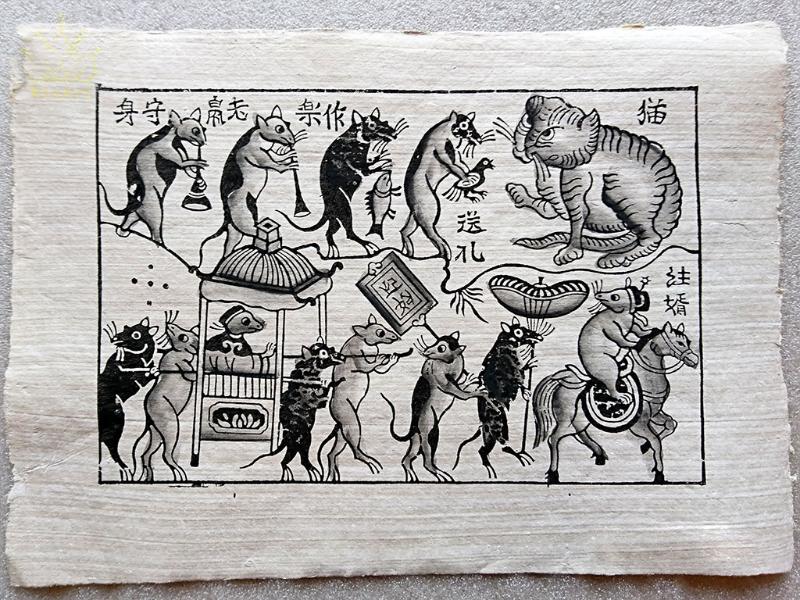
This post continues a short series about marriage traditions and my own adaptation of them for my wedding years ago. In this post and the previous, I identify a few defining characteristics of Vietnamese marriage patterns and relate them to Vietnamese history and culture more broadly. The last post discussed patrilocal residence, bride price, and betel chewing, and I pick up where I left off.
Third, ethnic Vietnamese historically favored arranged marriages in which the parents selected spouses and negotiated marriages on behalf of their children. By custom, the parents of a young man (and not the young man himself) made the proposal to the parents of a young woman, and the latter parents (not the young woman herself) might accept or reject but typically did not make proposals. The two families often communicated through a matchmaker, who was often a woman. There’s a common misconception in the West that arranged marriages are inherently coercive and that parents force their children into marrying complete strangers based on monetary considerations. But that’s a wildly unfair assumption! After all, loving parents in all times and places want their children to marry responsible spouses who will treat them well.
Although some marriages were undoubtedly coerced, the evidence suggests that the Vietnamese arranged marriage had become a rather flexible institution by the mid-twentieth century. Indeed, numerous memoirs and fictional accounts suggest that young people often agreed to the arrangement and sometimes had some say in who they wed and that parents might take their children’s preferences into account. In Le Ly Hayslip’s memoir, When Heaven and Earth Changed Places, about her life as a peasant girl in Quảng Nam province, central Vietnam, she recounted that her grandparents arranged for her father to marry the pretty village girl he had been admiring from afar. They chose her because she had a reputation as a hard worker, and he happily went along with their selection.1 Hayslip’s mother was born in about 1908, so the marriage would have taken place in the mid- or late 1920s.2 In Kiem Do’s memoir, Counterpart, about his experience as a naval captain in the Republic of Vietnam (South Vietnam) during the Vietnam War, he describes his infatuation with his future wife when the two met on vacation in northern Vietnam in the early 1950s. The lovebirds began discreetly exchanging letters, and his ever alert mother intercepted a missive. Then, his mother secretly traveled to meet the girl’s family, and the two mothers approved of the match without their children’s knowledge.3 After his mother’s death, it was the girl’s mother that promoted the marriage.4 In the popular song, “The Tea Seller” (“Cô hàng nước”) which according to the internet was written by Vũ Minh in 1952, the narrator is a young man who falls in love with a pretty tea vendor on the outskirts of Hanoi. He begs his parents to make the proposal to her parents, his mother agrees, and he fantasizes about their wedding. But when he returns to the tea stand after a prolonged absence, his beloved his long gone. In these accounts, parents do not force their children into unhappy marriages, though they do exercise the ultimate power to make and reject proposals, and no relationship could proceed to the point of marriage without familial approval. The prospective couples are at least somewhat acquainted, and sometimes their feelings for each other are mutual. Perhaps most importantly, these accounts depict arranged marriages that are fully consensual and utterly romantic. Apparently, parental involvement didn’t put a damper on passion for many lovestruck Vietnamese!
These three elements – patrilocal residence, bride price, and parental arrangement – are reflected in the two most important rituals of courtship and marriage: the engagement ceremony (đám hỏi or, more formally, lễ ăn hỏi or lễ đính hôn) and the wedding ceremony (đám cưới or, more formally, lễ rước dâu or lễ thành hôn). (In times past and among wealthier families, there were often numerous elaborate ceremonies, which has given rise to numerous terms with overlapping and changing meaning, but I have chosen these terms based on mainstream, contemporary practices.)5 The engagement ceremony traditionally marked the final stage of the negotiations between the two families. If the groom’s family makes preliminary inquiries and receives a positive response from the bride’s family, the former will pay a visit to the latter to formally make the proposal of marriage, often with the matchmaker as a facilitator. The two sides then engages in negotiations over the course of a couple of visits. The parents verify the astrological compatibility of the prospective couple and discuss the quantity and types of betrothal gifts to be given to the bride’s family and, if applicable, the length of bride service. During these visits, the bride’s family would have traditionally offered their guests areca nuts and betel leaves. The engagement ceremony marks the final stage of the negotiations when the two sides fix the date for the wedding ceremony. After the engagement ceremony, the young couple is considered engaged, and neither family is supposed to make or entertain other offers. Even today, when most marriages are no longer arranged by parents, a couple is considered engaged not because either half of the couple has proposed to the other but because they have had an engagement ceremony. Thus, Vietnamese people conceive the engagement not merely as a commitment between two people but as a socially recognized agreement that a couple will wed.
The wedding ceremony was a fulfillment of the agreement, and its main practical function was to bring the bride back to the groom’s home, in keeping with patrilocal residence. Additionally, the marriage ceremony also involved ancestral rites (lễ gia tiên). The worship of ancestors (thờ cúng tổ tiên, or more colloquially đạo ông bà, or “the religion of grandparents”) is an animist practice that has deep roots in Vietnamese culture.6 Vietnamese traditionally conceived of their families as including both the living and the dead, and families expressed their love and reverence for their forebears by worshipping them. Wealthy families might have a dedicated building with an altar for honoring their ancestors while more modest families might simply have an altar in the their home. In times past, families displayed tablets with the names of deceased family members on the altar, but with the rise of photography in the 20th century, most Vietnamese replaced tablets with photos of the dead. There are special ancestral rites that are performed during weddings, funerals, and special times of the year, such as the Lunar New Year and the anniversary of a deceased family member’s death (đám giỗ). During these occasions, families make offerings (cúng) to the deceased by placing food, drink, fruits, and flowers on the altar. Then, the eldest male in the family leads the rest of the family in lighting incense and kneeling and bowing deeply before the altar (lạy). In some cases, family members may stand and bow (vái or xá) rather than kneeling. Only after the incense burns out are family members allowed to remove the offerings and consume the food and drink themselves. It is also common for the living to pray to the dead in times of trouble or uncertainty and to inform the dead through prayer about major events in the family, such as births, marriages, and deaths.
The animist practice of ancestor worship likely dates back to the earliest period of Vietnamese history, and it was reinforced by the spread of Confucianism from China to Vietnam. In 111 BC, the Han Chinese empire conquered the Red River delta in northern Vietnam and gradually introduced Confucianism, which was the official ideology of the empire. One of the core values of Confucianism is filial piety (Viet. hiếu, Ch. xiao), the duty of every person to love and revere his or her parents, grandparents, and ancestors. To be filial, you must obey your parents when you are child, care for them in their old age, and perform ancestral rites for them when they are dead. Thus, making offerings of food, drink, and flowers is a way of caring for deceased family members as if they were alive and expressing one’s filial piety. Interestingly, it is considered perfectly normal to worship one’s ancestors without actually believing that one is feeding them food or that they can hear one’s prayers. Even in traditional times, many Vietnamese, especially Confucian scholars, regarded ancestor worship as a ritual of remembrance and family loyalty rather than anything supernatural.
Ancestor worship and patrilocal residence are at the core of the traditional wedding ceremony. On the day of the wedding, the groom and some members of his family travel to bride’s home with betrothal gifts, such as areca nuts and betel leaves. The bride’s family places a portion of the gifts on their ancestral altar, often in addition to their own offerings. An elder in the bride’s family lights incense, and the bride and groom kneel and bow before the altar to pay respect to her ancestors. Then, the couple (or just the groom) expresses their gratitude and respect towards the bride’s parents. The bride’s family then treats the groom and his entourage to a celebratory meal and returns a portion of the betrothal gifts to them. Afterwards, the bride and some members of her family travel back to the groom’s home, and the process repeats. At the groom’s home, an elder in his family lights incense, the couple kneels and bows before his ancestral altar, and then they (or just the bride) express their gratitude and respect towards the groom’s parents. The groom’s family then treats the bride and her entourage to a celebratory meal. Nowadays, many couples choose to honor both of their parents simultaneously, often at the bride’s home, by pouring tea for their parents and the rest of their elders. (Some websites on the internet refer to this as a “tea ceremony,” but I think that is incorrect. It’s a popular contemporary practice but not a traditionally core ritual.) For a Westerner, what’s remarkable about the traditional Vietnamese wedding is that it takes place in the family home rather than a house of worship, and it doesn’t involve any priests or clerics or officiants of any sort. Instead, it’s overseen by the elders in both families and is an extension of ancestor worship. The emphasis is on the incorporation of the bride into the groom’s family and an acknowledgement of both lineages. In this family-centric ritual, the legitimacy of the marriage derives from the approval of both families, the proper adherence to ancestral rituals, and the surrounding community witnessing the festivities, not on vows taken before a supreme deity or the community witnessing the actual ancestral rite.
Of course, there are countless variations on traditional courtship and marriage rituals, and the practices I’ve described are far from universal among Vietnamese people today. Religious change has transformed the cultural repertoire. After Catholicism arrived in Vietnam in the 17th century, the Catholic wedding was added to the mix, and some Vietnamese Catholic communities abandoned ancestor worship because they considered it contrary to their religion while other Catholic communities continued to practice it. There were also new faiths like the Cao Đài religion that emerged in southern Vietnam in the late 1920s. The Cao Đài faith created new customs, such as the vegetarian wedding banquet. The Buddhist Revival (1920s-1950s) in Vietnam gave rise to the invention of the hằng thuận ceremony (often translated as “everlasting harmony”) as a Buddhist equivalent of the church wedding. Therefore, we should think of Vietnamese marriage rituals not as a single, rigid protocol frozen in amber but infinite and evolving variations on a recognized formula.
IMAGE CREDIT
The featured image is a famous Đông Hồ-style painting of a rat wedding. Đông Hồ is a village in the upper Red River delta in northern Vietnam, and it is famous for a distinctive style of folk painting. Note that the rats in the top half must offer a bribe to the cat to carry out the wedding, but the rats on the lower half are happily bringing the bride back to the groom’s home. The bride sits in a palanquin, while the groom leads on horseback and turns back to steal a glance at her. This is one of the most famous Đông Hồ paintings with numerous versions of it all over the internet. I found this particular one here: https://artnam.vn/tranh-dam-cuoi-chuot/.
- Le Ly Hayslip and Jay Wurts, When Heaven and Earth Changed Places (New York: Plume, 1989), 31. ↩︎
- Hayslip’s mother was forty-one when her daughter was conceived, which means she would have been born around 1908. See Hayslip, When Heaven and Earth Changed Places, 1. ↩︎
- Kiem Do and Julie Kane, Counterpart: A South Vietnamese Naval Officer’s War (Annapolis, Md.: Naval Institute Press, 1998), 58-61. ↩︎
- Do, Counterpart, 82-84. ↩︎
- For a comprehensive list of the ceremonies practiced in northern Vietnam in the first half of the 20th century, see Toan Ánh, Nếp cũ con người Việt Nam: Phong tục cổ truyền (Saigon: Khai Trí, 1970), 154-172. ↩︎
- aThis paragraph and following draws heavily from Anh Q. Tran, Gods, Heroes, and Ancestors: An Interreligious Encounter in Eighteenth-Century Vietnam (New York: Oxford University Press, 2017), 76-132 passim. ↩︎