
This post continues a short series about marriage traditions and my own adaptation of them for my wedding years ago. In my first two posts, I identified a few defining characteristics of Vietnamese marriage patterns based on the existing research, including patrilocal residence, bride price, arranged marriages, ancestor worship, and the custom of betel chewing. I also explained how those characteristics are reflected in the two main marriage rituals today, the engagement ceremony and the wedding ceremony, and pointed to primary sources on these rituals from the seventeenth century. In this post and the previous one, I suggest a couple of ways that Vietnamese living outside of Vietnam can honor their heritage on their wedding day.
6. SERVE VIETNAMESE FOOD TO YOUR GUESTS
The traditional food served at weddings is fancy dishes. By the early decades of the 20th century, wedding dishes included sticky rice flavored with the red gấc fruit (xôi gấc), pork loaf (chả lụa or giò lụa), roast pig, boiled chicken, egg rolls (chả giò or nem rán – two slightly different dishes, according to some Vietnamese), and other expensive or labor-intensive dishes. But what’s considered expensive and fancy changes with time and place! Today, many of those once-expensive dishes are rather affordable. Moreover, if you are living outside of Vietnam, some dishes that are not considered fancy actually require a great deal of effort because the ingredients are difficult to find. Therefore, I would argue that honoring your Vietnamese culinary heritage on your wedding day doesn’t have to mean following a repertoire of culturally-prescribed dishes. Instead, you can choose your favorite dishes because those dishes represent your heritage to you. When my husband’s family “welcomed and escorted” me home, they chose to serve Vietnamese sandwiches (bánh mì thịt nguội) to their guests. Sandwiches are a common street food in Vietnam and hardly wedding fare, but my mother made the best vegetarian Vietnamese sandwiches I have ever tasted, and my husband wouldn’t do without them on our wedding day. Similarly, during my engagement reception in Vietnam, I absolutely insisted on serving canh chua, or Vietnamese sour soup, even though it’s not considered fancy. Canh chua is one of my husband’s favorite dishes and also a favorite of mine. The restaurant obligingly gussied up their canh chua into a hotpot to make it more banquet-like and wedding-appropriate, but what mattered was that the soup was a delicious reminder of how much my husband embraced my heritage.
Another common food served at weddings are bánh phu thê (meaning, “husband and wife cake”), also pronounced bánh xu xê. It is a small sweet cake made from either tapioca starch or sticky rice flour (the internet disagrees on the main ingredient), filled with mung bean paste and coconut shavings. The cake is traditionally green, most likely because it was wrapped in banana and/or coconut leaves. Bánh phu thê is popular at weddings because of its name, but you can find it outside of weddings too.
7. “TRADITIONAL” DRESS FOR THE BRIDE AND GROOM
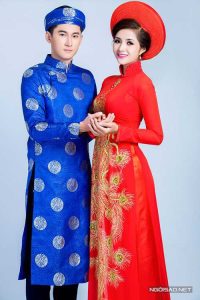
The áo dài is considered the Vietnamese national dress, though it fell out of fashion among men decades ago. The áo dài is a long tunic slit on both sides and worn over loose pants. Today, many couples choose to rent their wedding áo dài or buy premade wedding áo dài for both partners. But if you have the means and know a good áo dài tailor, it’s not hard to do something more creative. Just like a young American couple might to choose a vintage look for their wedding, such as a 1920s, Great Gatsby-themed event, so too can diasporic Vietnamese draw inspiration from Vietnamese fashion history. In short, you can both honor your sartorial heritage and reinterpret it.
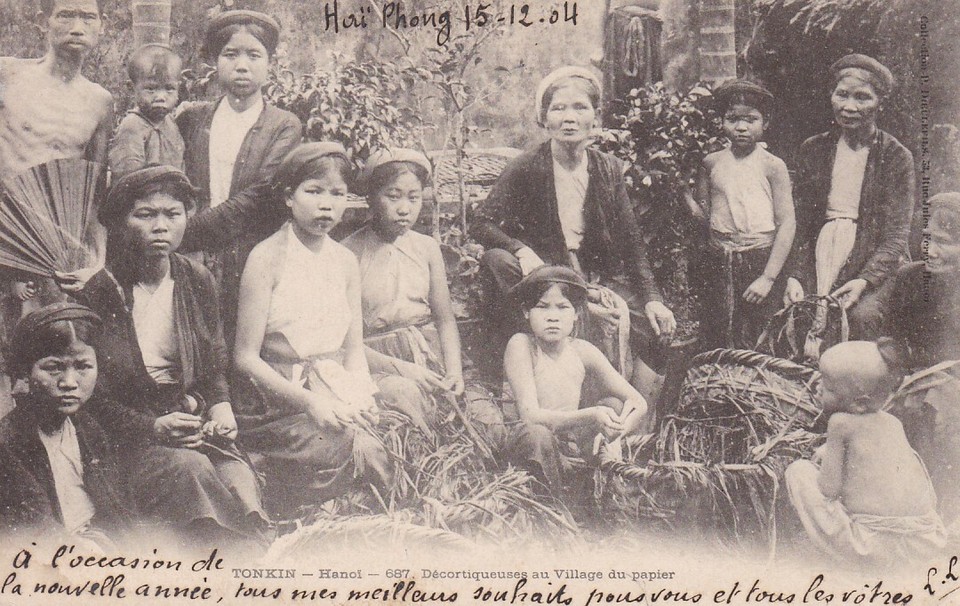
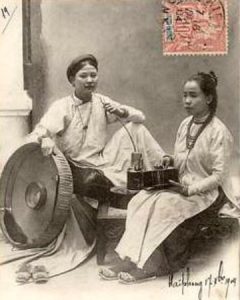
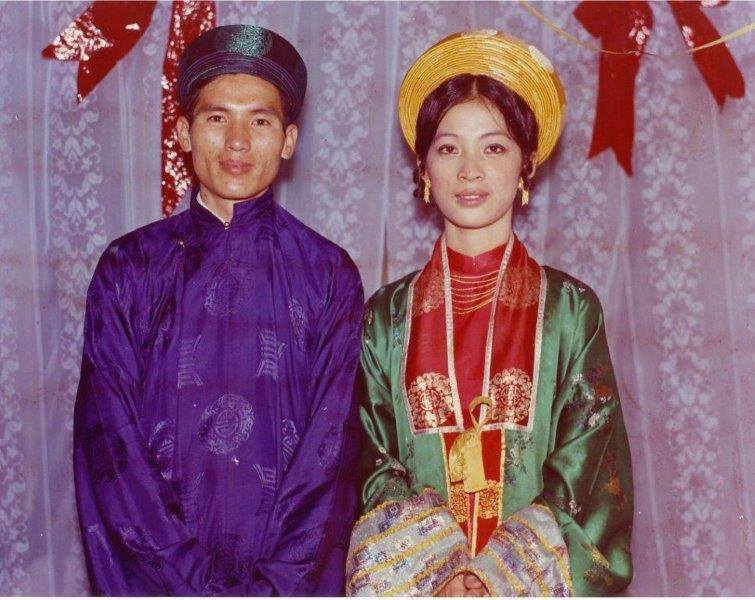
Most Vietnamese think of the traditional bridal ensemble as consisting of three core elements: an áo dài; an áo mệnh phụ, a long matching cardigan with wide sleeves to be worn over the áo dài; and a khăn vành dây, a large, stiff turban worn on the head like a crown. This ensemble is inspired by the non-bridal, imperial dress of royal ladies of the last Vietnamese dynasty. Red or pink is the typical color for brides today, but it’s far less universal than white is as a bridal color in the West. Yet this conventional ensemble and red and pink were not always considered traditional or even typical. Bridal dress was historically a young woman’s nicest outfit and would have been in a similar style to her everyday outfit. Over the course of the twentieth century, women have worn different outfits on their wedding day, ranging from various versions of the áo dài to the four-paneled tunic (áo tứ thân) worn over a backless camisole tothe five-paneled (áo ngũ thân). Before the advent of mass produced clothes, women often wore brown tunics but accessorized with colorful scarves, belts, or camisoles. Even a quick research on the internet yields a wide variety of historical women’s clothing over the course of the 20th century, and there’s no reason why you can’t choose a vintage style that speaks to you rather than whatever is in style at the moment or whatever is now deemed traditional.
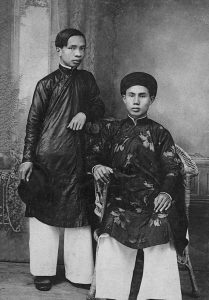
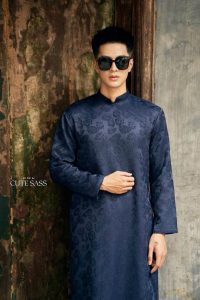
Before the 1920s, Vietnamese men and women wore similar clothes, so what’s considered traditional dress for men may seem somewhat feminine to people today. In the first half of the 20th century, men wore loose áo dài or the five-paneled áo ngũ thân, with minor regional differences between northern and southern Vietnam. Today, designers have reworked men’s áo dài to be more structured and fitted to appeal to modern, masculine sensibilities.
If you gather historical and/or modern photos for inspiration, a skilled and patient áo dài tailor should be able to recreate your chosen style.
8. HISTORICAL HAIRSTYLES
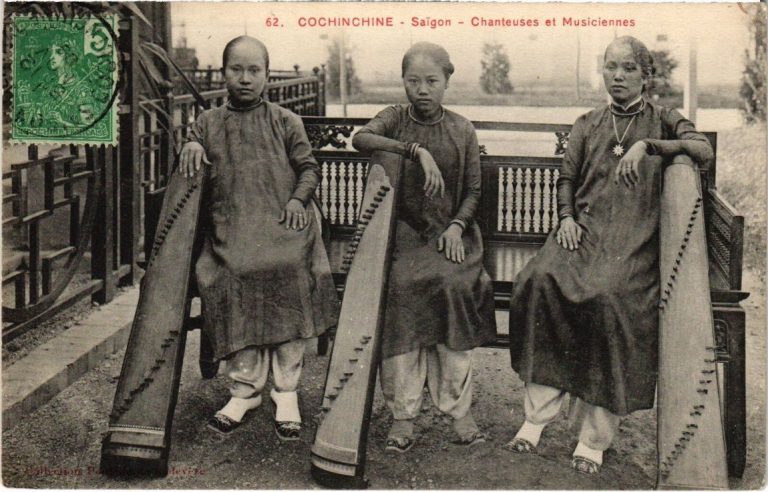
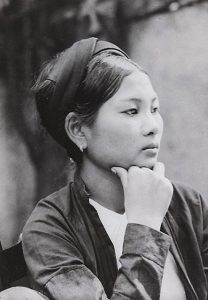
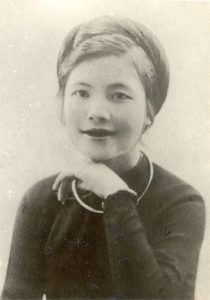
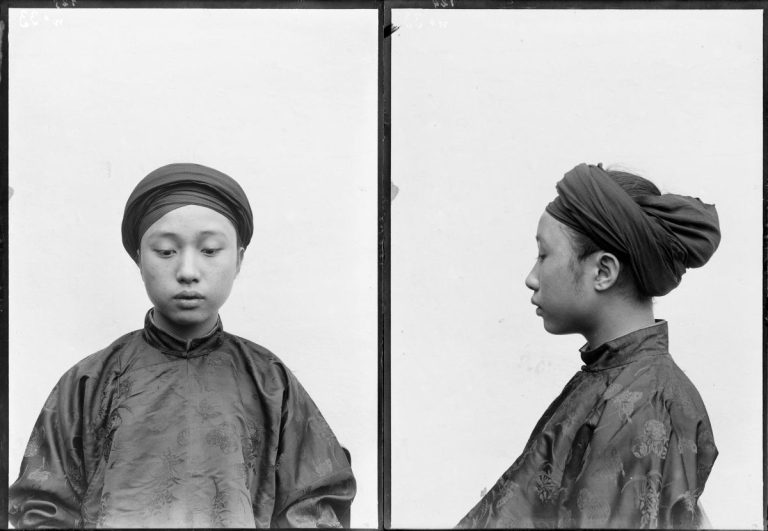
You can also find inspiration in Vietnamese fashion history for your hairstyle. Women’s hairstyles have evolved over the course of the 20th century and varied considerably between regions. In the early decades of the 20th century, southern women pulled their hair into a bun at the back of the head. In contrast, northern women wrapped their hair in a scarf and coiled the scarf around the crown of their head, sometimes letting the end of the ponytail dangle down one side of their head. By the 1930s and 1940s, fashionable women in northern cities had discarded the scarf in favor of coiling their hair bare. Of course, global fashions also influenced hairstyles, and one my aunts recalled that she wrapped her hair bare as a young woman in Hanoi and added a little pompadour-like wave above one side of forehead, similar to the sculpted pompadours and curls of Old Hollywood. My aunt migrated south when the country was partitioned in 1954 and realized that women in Saigon wore their hair very differently. After the relocation, she had to become a market vendor to support her family, and she switched to wearing the southern-style bun to blend in at a market full of southern women. She didn’t want potential customers to keep their distance due to her strange hairstyle. All this is to say that there is a varied heritage of Vietnamese hairstyles for brides to choose!
Unfortunately, I know far less about men’s historical hairstyles. In traditional times, Vietnamese men wore topknots, which was often concealed under a turban (khăn đóng). Urban, educated men started cutting their hair short in the Western style starting in the 1920s, though it was decades before short hair became common among adult men. My sense is that men’s shorter hairstyles after the 1920s mirrored global fashion, but I am not certain on this point. In the above photo of “traditional” menswear, the man on the left has cut his hair while the one on the right continues to wear it long and tucked under the turban. Few men these days have long enough hair to recreate the traditional style, but it would be pretty impressive for a groom to grow out his hair and wear a topknot on his wedding day!
9. EARRINGS FOR THE BRIDE
It is customary in southern Vietnam for the mother-of-the-groom to give the bride a pair of earrings as a present on her wedding day. Unlike the betrothal gifts, the earrings are not negotiated in advance and become the personal property of the bride rather than her family’s property. Nor does her husband have any right over her earrings. Since only women wore earrings in traditional times, a bride’s earrings was a female form of property passed from mother-in-law to daughter-in-law. Before the advent of modern banking, jewelry could function like a savings account. A woman might keep her earrings during prosperous times, then sell them off when money was tight in order to provide for herself and her children. In fact, many Vietnamese parents, including my own mother, insist that a bride should be given fine jewelry in keeping with the idea that it serves as a savings account. When my sister-in-law married into the family, my parents selected a pair of earrings that featured the same metal and gemstone as her engagement ring so she could wear them as a set. My mother presented the earrings to my sister-in-law following the ancestral rite in front of my family’s altar. I am of the opinion that it is sufficient for mothers-in-law to give costume jewelry, not fine jewelry, to brides. Women today have jobs and independent incomes, so the gift is ceremonial rather than financial. In either case, I love this custom because it is one of the only – if not the only – form of specifically female inheritance in Vietnamese culture. It’s a beautiful feminist tradition that pays homage to one’s foremothers.
Although earrings are traditional, it’s an adaptable custom. My mother never pierced her ears, so my father’s mother gave her some bracelets for her wedding. I do not wear earrings either, and when I married my husband, my non-Vietnamese and very obliging mother-in-law followed Vietnamese tradition and gave me a necklace. It’s also possible to turn this custom into a reciprocal exchange, especially for same sex couples. Both mothers-in-law (or parents-in-law) could give their new son- or daughter-in-law a present, such as jewelry for brides and a nice watch or tie for grooms.
IMAGE CREDITS
The photo that resembles typical rental outfits I have seen in the US: https://vaiaodaimymy.com/3-cach-chon-ao-dai-cuoi-cho-co-dau-chu-re/
Standard bridal ensemble: http://navygermany.gerussa.com/main/40%20Nam%20Dam%20Cuoi/KyNiem_40_NamNgayDamCuoi.htm. The original source provides the date and location.
Four-paneled áo tứ thân: https://www.hippostcard.com/listing/pc-tonkin-hanoi-decortiqueuses-au-village-du-papier-vietnam-indochina-a36767/45239477/?sponsored=1. The top of this colonial-era postcard includes the date 1904, when the card was sent.
Five-paneled áo ngũ thân: https://commons.wikimedia.org/wiki/File:Ao_ngu_than_on_postcard_dated_1904.JPG. The lower right hand corner of this colonial-era postcard includes the date 1904, when the card was sent.

“Traditional” menswear: https://thanhnien.vn/tu-viec-cong-chuc-hue-mac-ao-dai-truyen-thong-nghi-den-le-phuc-viet-nam-185993192.htm. The original source of this photo f claims that the man on the left is the respected scholar Đào Duy Anh and that the photo was taken at the prestigious Quốc Học (National School), a secondary school, in Huế. If this is correct, the photo would have been taken likely in the late 1910s or early 1920s, given Đào Duy Anh’s age.
“Traditional” southern-style women’s bun: https://www.hippostcard.com/listing/pc-cochinchine-saigon-chanteuses-et-musiciennes-vietnam-indochina-a36986/45240309/?sponsored=1. I have been unable to accurately date this colonial-era postcard showing southern women’s hairstyle, but the stamp appears to be from about 1904.
Northern Vietnamese woman with coiled hair in a scarf: https://vi.wikipedia.org/wiki/T%E1%BA%ADp_tin:Tonkinoise.jpg. The date is is according to Wikipedia, but I have been unable to verify it.

Northern Vietnamese women with bare, coiled hair: https://vi.wikipedia.org/wiki/T%E1%BA%ADp_tin:Tr%E1%BB%8Bnh_Th%E1%BB%8B_%C4%90i%E1%BB%81n_(1912_-_1996).jpg. Internet sources claim that this portrait shows the entrepreneur, revolutionary, and loyal civil servant of the Democratic Republic of Vietnam (North Vietnam), Trịnh Thị Điền, in the 1930s. I have been unable to verify the date of the photo.
.jpg)
“Traditional” men’s top knot and turban: https://redsvn.net/khan-bui-toc-thoi-trang-thuan-viet-da-tro-thanh-di-vang2/. Internet sources identity this portrait as belonging to Vi Văn Định, who was a colonial-era mandarin of Thái Bình and Hà Đông province in the 1930s. The source claims that this photo was taken in 1896, but I have been unable to verify the date.