
Today is the 50th anniversary of the end of the Vietnam War on April 30, 1975. I wanted to mark the occasion with an irregular series that reflect on the war’s end and its aftermath. My very first post in the series is about Phan Nhật Nam’s Stories Along the Road, a book that reflects the long arc of recent Vietnamese history from war to troubled peace.
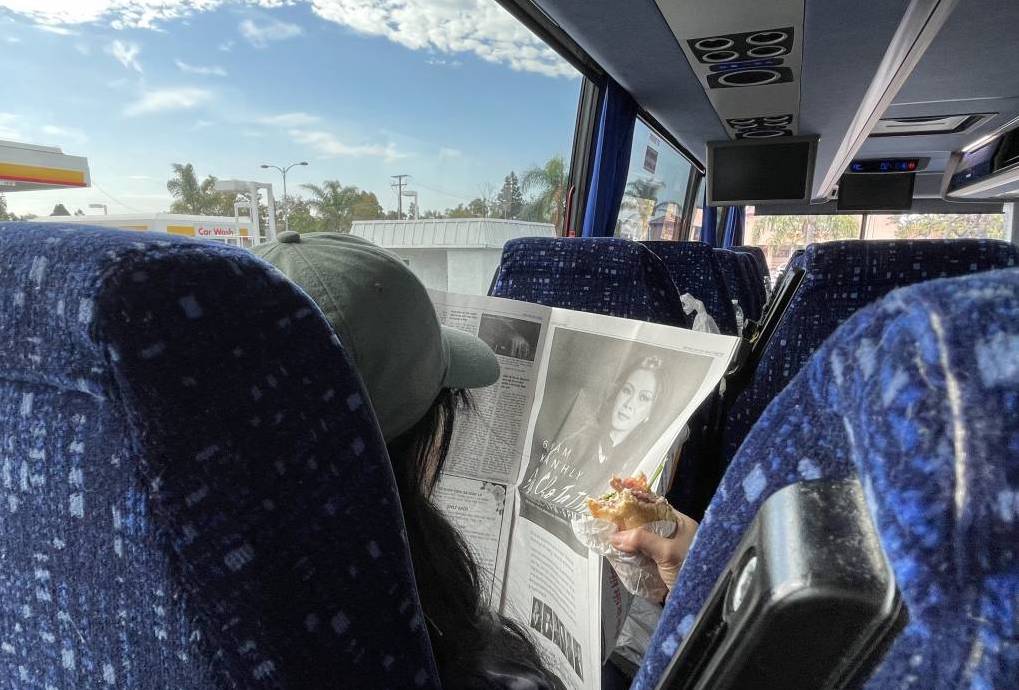
Phan Nhật Nam’s Stories Along the Road (Chuyện dọc đường, 2013) is a collection of vignettes about ordinary Vietnamese during and after the war. In the preface, the author explains that he heard these stories when he first arrived in America in 1993. He was a frequent passenger on the Little Saigon bus that ran between San Diego and Los Angeles, and he collected anecdotes from fellow passengers. But no more than half of the chapters explicitly reference the Little Saigon bus. The others recount experiences from the author’s own life. Phan Nhật Nam served in the airborne division of the Army of the Republic of Vietnam (RVN, or South Vietnam) and was the most famous military writer in the RVN. After 1975, the postwar government imprisoned him for fourteen years, including eight years in solitary confinement. Many vignettes are about his childhood friends, wartime comrades, and strangers that he met in and out of prison in Vietnam after the war. Thus, the book is an anthology of stories collected on the literal road traversed by the long-distance bus in southern California as well as the metaphorical road of Phan Nhật Nam’s life.
In collecting these stories, the author clearly meant to bear witness to the suffering of the Vietnamese people. Yet it should be stressed that these vignettes are not oral history interviews. Phan Nhật Nam narrativized, lightly fictionalized, and elaborated on the stories taken from his own experiences and that of others, and he aimed to capture emotional truth rather than historical fact. Most of the vignettes are about Vietnamese who were on the side of the Republic of Vietnam (RVN, or South Vietnam), though some are about Vietnamese who supported the Democratic Republic of Vietnam (DRV, or North Vietnam) or the National Liberation Front (colloquially known as the Vietcong), and Phan Nhật Nam depicts these Vietnamese quite sympathetically at times. The characters that populate the book include civilians, soldiers, widows, orphans, prisoners, and refugees, all of whom endure immense suffering. Indeed, it is suffering that often unites the characters even as politics divide them. For me, the most moving vignettes in the collection were the ones about soldiers’ wives, and I present two of my favorites below.
“Dark-Skinned Miss Hồng,” which can be alternately translated as “Black Miss Hồng” (“Cô ‘Hồng đen,’” 45-71), retells the touching story of an adoptive mother. The chapter begins with a chance encounter between two friends at the bus station in San José. The first woman tells the other one that she is visiting California to help their old classmate Hồng. She then launches into the story of Hồng’s family. Somewhat jarringly, the story starts with Hồng’s future husband, Huỳnh Đồng. Huỳnh Đồng had a crush on a girl when he was a schoolboy in Đà Nẵng and was surprised to meet an army ranger in an ice cream shop who resembled the pretty girl, but the army ranger beat up Đồng before he had a chance to introduce himself. Later, Đồng becomes an army ranger and decides to settle old scores with his commanding officer, who was the same ranger that had beaten him up earlier. After another fight, the commanding officer and Đồng reconcile. More importantly, the commanding officer introduces Đồng to his sister Hồng – the exact same girl whom Đồng had once admired. The story then jumps to the birth of Hồng and Đồng’s first child, and the tough army ranger is reduced to a nervous mess as he awaits the arrival of his son. It just so happens that Hồng shares the same hospital room with another mother, and this other woman abandons her baby immediately after giving birth. Hồng cannot help but feel great love for the other baby boy, and she convinces her husband that they should adopt the baby and raise him alongside their biological son. But here’s the kicker: the abandoned baby is a mixed race black Amerasian.
Hồng, her husband Đồng, and her brother joyfully welcome both boys into the family. The new parents insist on putting their names on the birth certificate of their adopted son, which would show that baby was born in wedlock despite not physically resembling his parents. The family also throws a party during which they instruct their friends and relatives to love the boys equally. But the neighbors gossip that Hồng cheated on her husband and gave birth to two sons with different fathers, and she becomes known as “dark-skinned Miss Hồng” or “black Miss Hồng” because she has a black child. After the war, the communist government imprisons and eventually executes Hồng’s husband and brother. Left alone, Hồng struggles to care for her toddler sons, especially as she is stigmatized as the mother of a black Amerasian. She eventually marries a North Vietnamese man and immigrates to the US with him and her two sons. But her new husband and the adopted son don’t get along and even get into an altercation, and the son is put on trial in the US. Hồng is now terrified regarding her son’s fate.
I found this vignette deeply touching. Hồng is presented as an ideal mother, and her maternal compassion dominates the chapter. She persuades her menfolk to accept a strange baby, and she is steadfast in her decision regardless of the damage it does to her reputation. The postwar government considered Amerasians to be children of the enemy, but Hồng never considers abandoning her adopted child. She then brings both children with her when she enters a new marriage and leaves the country. At the end of the story, we learn that she is worried sick for her adopted son but not whether she is concerned about her second husband.
“Dark-Skinned Miss Hồng” is the only work of Vietnamese literature I have ever encountered that features not only a mixed race character but also a transracial adoption. Mixed-race characters, if they appear in Vietnamese literature at all, are usually presented negatively or are minor characters without developed personalities. The adopted son in the vignette certainly falls into the second category, but what stands out is that he is depicted no differently than the biological son. They are both portrayed as adorable babies that are equally deserving of parental affection. Moreover, the transracial adoption is presented as an act of great love on the part of Hồng and her husband in defiance of social norms. In the hands of another author, the adopted son might have grown up to be a delinquent youth compared to the more respectable biological son. But Phan Nhật Nam depicts attributes the adopted son’s brush with the law to his love of family. The woman at the bus station tells her friend that the adopted son got into a fight with his stepfather because he loved his mother and brother so intensely. The implication is that the adopted son resorted to violence because he wanted to defend his family from the interloping stepfather. To be sure, the characters in the vignette are stock characters – the gentle, loving mother, the strong, protective father, and the sweet, innocent babies – but the piece is nonetheless powerful in its unconventional depiction of an adoptive family.
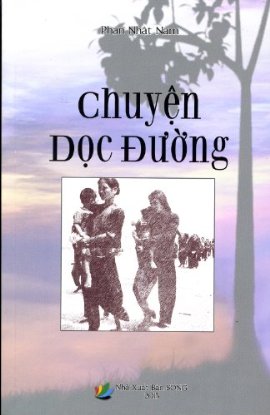
Phan Nhật Nam again explores the plight of widows in “The Feast of Light in the Third Month” (“Thanh Minh trong tiết tháng ba,” 269-290). This vignette follows four parallel lives: a DRV solider, an RVN soldier, and their widows. During the Easter Offensive of 1972, the city of Quảng Trị is the scene of intense fighting between the Army of the Republic of Vietnam and the People’s Army of Vietnam, that is, the army of the DRV. On the DRV side, Lê Văn Hưu is the second in command of a North Vietnamese scout platoon and holed up in a bunker with his comrades at the Nguyễn Hoàng School in Quảng Trị. On the RVN side, Sergeant Phan Tâm is a native of the area and volunteers to guide the 18th Marine Battalion to retake the school – a strategic location – from the North Vietnamese. Sergeant Tâm and the marines attack the school and hit Lê Văn Hưu, who uses his last strength to throw a grenade that kills Tâm. Hưu and Tâm die, and their comrades are unable to retrieve their bodies. Tthe RVN eventually retakes the city of Quảng Trị.
Then, the vignette jumps to the year after the war. In the sleepy district of Cẩm Thủy, Thanh Hóa province, Lê Văn Hưu’s widow Trịnh Thị Hàn decides she must go to Quảng Trị to look for her husband’s remains. After a long and difficult journey, she asks for information at the office of the provincial military authorities in Quảng Trị. But much to her dismay, the senior lieutenant at the office curtly informs her that North Vietnamese troops had buried all of their dead in a mass grave, and it would be impossible to determine the location of her husband’s remains. Meanwhile, in Suối Nghệ, Phước Tuy province, Sergeant Phan Tâm’s widow Thanh is determined to find her husband’s final resting place too. She also makes her way to Quảng Trị, only to face the receive callous answer from the senior lieutenant. He tells Thanh, if the military cannot locate the remains of North Vietnamese soldiers like Lê Văn Hưu, then of course they couldn’t possibly determine the whereabouts of dead “puppet” soldiers like her husband. Hearing the senior lieutenant use the derogatory term “puppet” (ngụy)to refer to soldiers who fought for the RVN, Thanh angrily insists her husband was a marine, not a puppet, and the authorities promptly kick her out of the office. Hàn follows her outside, and the two widows cry over their shared plight. They walk together to the mass graves and, unable to identify which one belonged to their husbands, they light a stick of incense for each grave.
At the end of the vignette, Hàn and Thanh promise to come back to Quảng Trị the same time next spring to visit the graves of the fallen soldiers. The timing of the visit would commemorate the anniversary of the end of the war on April 30 and coincide with the holiday of Thanh Minh, or “Feast of Light” (Ch. Qingming), the traditional East Asian holiday during which families visit, clean, and respair the graves of their loved ones. For that reason, the title of the vignette borrows the line, “Now came the Feast of Light in the Third Month” (Thanh Minh trong tiết tháng ba), from the most famous Vietnamese verse novel, The Tale of Kiều. Thanh Minh, or “Feast of Light,” falls during the third lunar month.1
“The Feast of Light in the Third Month” emphasizes the unity of Vietnamese suffering in spite of political differences. Lê Văn Hưu and Phan Tâm regard each other as enemies, but they share the same fate in death. They breathe their last in almost the exact same location at the exact same moment. After the reunification of the country, Hàn and Thanh share the same fate as widows. Both women long to find the remains of their husbands but face the cold indifference of local authorities. Phan Nhật Nam uses this vignette about parallel lives to emphasize that Vietnamese on all sides endured great loss and suffering. At the same time, the author was decidedly critical of the communist government and depicts the senior lieutenant as callous towards grieving widows. The author implies that the communist authorities oppressed not only the former enemy but all Vietnamese during the postwar period.
Interestingly, both vignettes feature a gendered transition from the masculine-inflected war to the feminine-inflected peace. The early part of the vignettes focus on the male characters, all of whom are courageous soldiers. Then, the latter half of the vignettes shift to explore the lives of the female characters, all of whom are loyal, loving widows. The bifurcation presents men as divisive and violent and women as unifying and gentle. Hàn and Thanh forge a sisterhood in shared suffering even if their husbands died killing each other. The sweet-natured Hồng is capable of loving across racial lines (her adopted son) and political lines (her second husband), even if the family members she loves are at odds with each other. The gendered transition is reminiscent of the Vietnamese aphorism, “Men are needed in times of disorder, women are needed in times of peace” (Trai thời loạn, gái thời bình). The saying reflects the conventional assumption that men are favored during war and rebellion while women are more valued during peacetime. Reflecting on the decades of war and peace that he has survived, Phan Nhật Nam appears to suggest that Vietnamese women are the best hope for reconciliation between former enemies and national unity against an oppressive government.
THE TECHNICAL STUFF
Note for readers: Stories Along the Road has not been translated into English, and the original Vietnamese is not available online. A handful of libraries in the US have a copy of the Vietnamese original, and it is also for sale here: https://www.nguoivietshop.com/products/123-chuy%E1%BB%87n-d%E1%BB%8Dc-%C4%91%C6%B0%E1%BB%9Dng/.
Note for researchers: This book belongs to Phan Nhật Nam’s extensive postwar oeuvre. It would be great for scholars interested in Phan Nhật Nam’s life and work, RVN soldiers, Vietnamese women during war and peace, postwar Vietnam, reeducation camps, and the literature of the RVN diaspora.
The version I read: Phan Nhật Nam. Chuyện dọc đường. Westminster, CA: Sống, 2013.
Image credit: The cover of the book can be found here: https://www.nguoivietshop.com/products/123-chuy%E1%BB%87n-d%E1%BB%8Dc-%C4%91%C6%B0%E1%BB%9Dng/. The photo of the Little Saigon bus can be found here: https://www.kqed.org/news/11926990/from-san-jose-to-little-saigon-on-the-banh-mi-bus.
1 I have relied on the translation of this line found in Huỳnh Sanh Thông, trans., Tale of Kiều, by Nguyễn Du (New Haven: Yale University Press, 1983), 5.