
I am marking the 50th anniversary of the Vietnam War in 1975 with an irregular series that reflects on the war’s end and its aftermath. This third second post is about Phan Thúy Hà’s Don’t Mention My Name, which serves as a foil to Phan Nhật Nam’s Stories Along the Road.
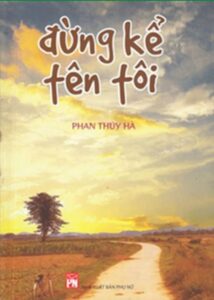
Phan Thúy Ha’s Don’t Mention My Name (Đừng kể tên tôi, 2017) is a collection of personal accounts about North Vietnamese civilians and soldiers during and after the war. The author conducted extensive interviews with her neighbors and friends in Hà Tĩnh province and lightly edited and stylized their narratives. Many of her interviewees felt that their experiences were rather insignificant and wanted their testimony to remain anonymous. “Don’t mention my name,” many of them told Phan Thúy Hà (hence the title of the book), but they all eventually allowed her to record their names and residences (12). My last post about this collection examined a novella-length narrative about a foot soldier who fought for the Democratic Republic of Vietnam (DRV, or North Vietnam). This one will focus on two shorter stories about traumatized veterans and their wives after the war, told from the perspective of the wives.
“The Wife of a Hero” (“Vợ anh hùng,” 265-278) is a sweetly romantic and tragically funny story about the loyal wife of a soldier whose wartime service has rendered him infertile. The title comes from a military honor that officially designated her husband as a “hero” (anh hùng) in 1978, but their life after the war contained little of the happily-ever-after that should await a war hero. After the award ceremony, a member of the organizing committee privately explained to the wife that her husband’s severe malaria had destroyed his capacity to have children. The couple sought medical treatment in Hanoi and met other military couples facing the same fate. Unfortunately for the couple, the doctor pronounced the husband incurable and, with the husband’s consent, slept with the wife so that she could conceive. They eventually had two healthy children.
Yet their troubles were not over, as the husband was plagued by frequent malaria-related paroxysmal attacks. These attacks did not merely cause fevers and chills but also triggered his post-traumatic stress disorder (PTSD), and the veteran experienced flashbacks during which he believed he was still a soldier. He mistook his wife and children for the enemy, fled his home to hide elsewhere in the village, and thought the villagers were his comrades. During these episodes, friends, relatives, and neighbors had to drop everything to help the wife look for her husband. Once, the veteran’s brother-in-law gently tried to persuade him to return home, but the veteran slapped the brother-in-law and accused the latter of wanting to surrender to the enemy. The village chairmen managed to calm the husband by pretending to be a subordinate soldier and counseled the husband to confer with his superiors. Yet even then, the veteran became agitated and called out the names of his comrades before bursting into tears. Witnessing the sad scene, his wife and neighbors could not hold back their tears.
The story abruptly jumps back in time to the couple’s early relationship. They met in the village and were married after an acquaintance of only a few days. He then left for the war, and they did not see each other again for six long years. When some of his comrades passed through, the lonely wife was touched to hear stories about her husband’s exploits. When village men tried to flirt with her, she turned them away. When he returned two years after the war ended, her heart beat wildly, but she was so embarrassed that she ran and hid, and the two of them were awkwardly distant until the very end of his visit. The narrative ends with a question that seems to come out of nowhere: “How could such a compassionate man ever have shot a gun? Because of hatred” (“Anh nhân từ vậy sao có thể bóp cò? Bởi vì lòng căm thù”: Phan Thúy Hà 278). The reader is left wondering about the contradictions that coexist within the soldier-husband.
The same themes of postwar hardship, marital challenges, and PTSD are explored in another narrative, “Those Bunkers Where We Hid From American Bombs – That’s Where I Hide From My Husband During His Episodes” (“Hầm tránh bom Mỹ. Và giờ là nơi tôi trốn chạy khi chồng lên cơn,” 199-213). This story starts with what seems to be a wartime air raid. In the middle of the night, the husband woke up screaming about a bomb attack, and the wife escaped with their child. But then the reader learns that the war was long over, and the husband was merely having a flashback to his time as a soldier. He had been injured during the Tet Offensive of 1968 when a bullet pierced his temple, and it caused permanent psychological damage. Now, when he had violent flashbacks, the wife grabbed her child and ran, often hiding in the bomb shelter that the villagers had used during American raids years ago.
The narrative then turns back to the husband’s childhood during the war. He had been orphaned at a young age and grew up poor with no relations except his older half-brother. Despite such humble origins, he was nevertheless famous in the village for shooting down an American plane and capturing the pilot during an air raid (probably during Operation Rolling Thunder). He tied the pilot to the jackfruit tree in the middle of the village and triumphantly handed the American over to the local authorities. The young man joined the army and rose to become a company commander, and he married his wife shortly after his return. But just like in “The Wife of a Hero,” more suffering awaited the young couple after the war. His half-brother refused to help them, and they struggled to feed their children. Unable to watch the kids go hungry, he resorted to stealing cassava from the agricultural cooperative and was caught red-handed. The sympathetic villagers silently donated a string of cassava tubers the next morning, much to his shame. The couple also struggled with his PTSD. He grew explosively angry whenever he had a flashback and lashed out at his wife and son, even unintentionally injuring them. His wife grew accustomed to fleeing at a moment’s notice, but at other times, she was too tired to run and instead got on her knees and begged him to calm down. Once the episode passed, he had no memory of what he had done.
Sadder still, their son and daughter-in-law inherited their fate. Their son developed psychological problems which they suspected to be the result of the husband’s poisoning from Agent Orange. As a result, the son also had strange episodes during which he grew explosively angry, or he left abruptly without explanation for extended periods. Like the long suffering wife, the daughter-in-law became used to gathering her children and fleeing whenever her husband’s mood turned. One night, the wife ran into the hills to escape another of her husband’s violent episodes, only to meet her daughter-in-law doing the same, and the two held each other and cried over their shared misfortune.
Yet the story ends on an unexpected light note. In the last part, the narrative switches to include Phan Thúy Hà’s conversation with the elderly couple and the husband’s own narration. He recounts a love affair from before his marriage that he had given up to return to his village. If that young woman knew how his life turned out, she would be grateful that he had abandoned her, he speculated. After pouring his heart out to the author, the veteran realizes that he feels much better. Phan Thúy Hà is deeply touched by their experiences, and she tells the elderly couple that she will write “a story about a marriage in which their love [for each other] is even greater than stories of war” (“một câu chuyện vợ chồng mà tình thương yêu lớn lao hơn cả chuyện chiến tranh”: Phan Thúy Hà 213).
What I like about these two stories is that they are loving portraits of gentle, modest couples who remained committed to each other despite terrible suffering. The husbands, as portrayed through the eyes of their admiring wives, are just as brave as the idealized warriors of communist propaganda. But their wartime bravery is never presented as their greatest achievement. Instead, it is their steadfast love, quiet endurance, and very ordinary existence after the war that secure their wives’ affection and win the reader’s sympathy.
THE TECHNICAL STUFF
Note for readers: Neither of these stories have been translated into English, and the book is not available on the internet.
Note for researchers: “Wife of Hero” and “Those Bunkers Where We Hid From American Bombs – That’s Where I Hide From My Husband During His Episodes” would be great for scholars interested Operation Rolling Thunder, village life in northern Vietnam in the 1980s, veterans of the People’s Army of Vietnam, veterans’ wives and families, gender relations in postwar Vietnam, and PTSD.
The version I read: Phan Thúy Hà. Đừng kể tên tôi. Reprint ed. Hanoi: Phụ Nữ, 2018.
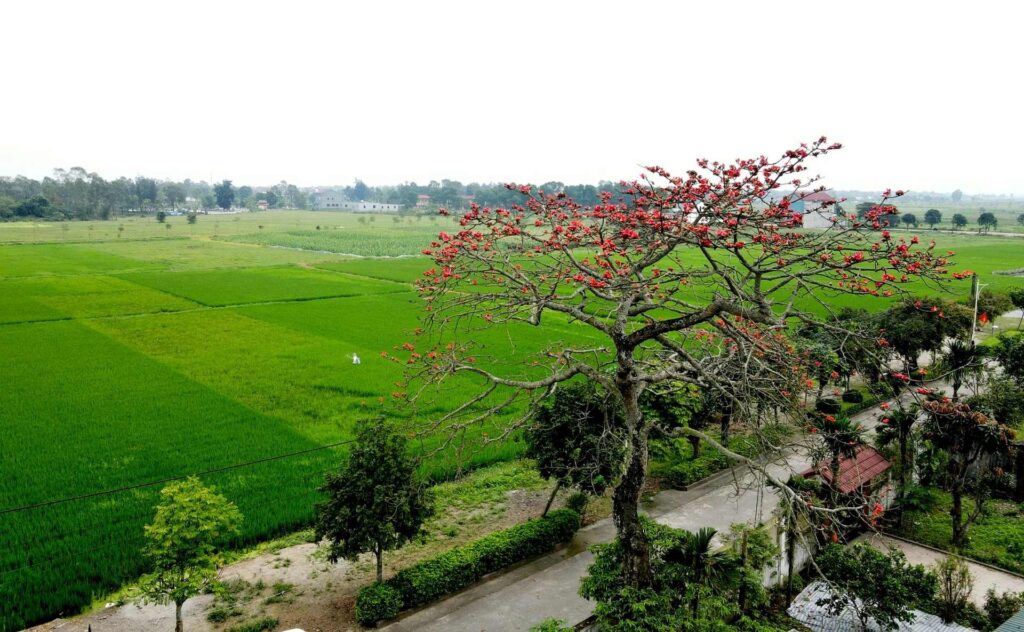
Image credit: The photo at the top of this post shows a contemporary rural scene in Hà Tĩnh province and can be found here: https://daidoanket.vn/nhung-cay-hoa-gao-co-thu-dua-sac-do-giua-lang-que-ha-tinh-10276759.html. The book cover can be found here: https://www.goodreads.com/book/show/53987616-ng-k-t-n-t-i.